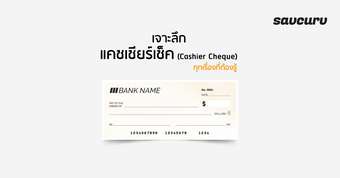
Getting to Know the Cashier's Check: Complete Information for Those Who Want to Use It
What is a cashier's check?
Purpose of the cashier's check
- Real estate transactions: Cashier's checks are often required for transferring large sums of money in real estate transactions. This is because it is a reliable way of delivering money between parties.
- Purchasing vehicles: When purchasing high-priced vehicles Using a cashier's check increases security for both buyers and sellers. This is to confirm that the funds are legitimate and available for use.
- Payment of services: Some individuals or organizations prefer to accept payment via cashier's check. Especially when dealing with unknown customers or for high-value service work. This reduces the risk of rejected checks or fraud.
Benefits of cashier's checks
- High security: Cashier's checks are certified by the issuing bank. This is unlike a personal check that may be rejected when there are insufficient funds in the account. The bank will make the payment directly. Helps reduce the risk of loss.
- Widespread Acceptance: Cashier's checks are widely accepted by individuals, businesses, and government agencies. This makes it a reliable payment method across a wide range of industries. By ensuring that the money actually exists and can be easily deposited.
- Ready to use immediately: Cashier's checks can be used immediately when issued. This speed is ideal for transactions that require immediate proof of funds.
Receiving a cashier's check
- Go to the bank: Go to the branch where you have an account and contact a representative to request a cashier's check.
- Provide required information: You must specify the name of the payee. Amount to be paid and other details As required by the bank You may be required to present identification to verify your identity.
- Pay the required amount: You will be required to pay the full amount by cash or wire transfer before receiving the cashier's check. with a fee of 20 baht or other fees charged by the bank
- Receive a cashier's check: When the bank receives the money and completes the check. A cashier's check will be issued to you. This usually includes the bank's logo, account number, and authorized signature.
Precautions for use- Verify the authenticity of the check: Before receiving the cashier's check Make sure it is authentic, such as watermarks, color-changing ink. or microprinting. If in doubt, contact the issuing bank directly to confirm.
- Avoid overpayment: Be wary of the person or business who hands the cashier a check for more than the agreed upon price. Scammers often use this method to get their money back. Always confirm the correct amount with the payer.
- Beware of Unknown Cashiers: If you receive a cashier's check from an unfamiliar source, Be extremely careful. A counterfeit check may be sent to get you to deposit money and then return part of it before the check is rejected.
- Keep records: Record details about cashier's checks. Including a copy of the check Transaction receipt and related contacts These records will be helpful if a dispute or mistake arises.
Differences between cashier's checks and regular checks
- Funds Guarantee: The cashier's check is issued and guaranteed by the bank. Funds are deducted from the payer's account at the moment of issue, making it a secure and guaranteed form of payment. A regular check is an instrument drawn from the personal account of the payer. And money is not guaranteed immediately.
- Payment Guarantee: The bank ensures that funds are always available and available for cashing. For general checks Cashback depends on the payer's account balance. This can cause the check to be rejected if the balance is insufficient.
- Reliability: Cashier's checks are more widely accepted. This is especially true in high-value transactions or when the parties are not familiar with them. This provides a higher level of security and assurance than regular checks.
- Clearing Process: Cashier's checks usually have a faster clearing process than regular checks. This is because the money is guaranteed by the issuing bank. It is therefore considered equivalent to cash and is usually deducted quickly. Regular checks may take longer because the payer's account and balance must be verified.- Charges and Fees: Cashier's checks often come with fees or charges, which can vary by bank and the amount issued. Regular checks generally have no additional fees. This is because it is a standard feature of a personal bank account.